

Young Women Are Getting Richer, and Banks Need to Pay Attention

Empowering a New Era: How Banks Must Adapt to the Rising Economic Power of Young Women
The financial landscape is undergoing a seismic shift, with young women at the heart of this transformation. Financial institutions, especially regional and community banks, are facing the new reality that is the burgeoning economic power of Generation Z and millennial women. For smaller regional and community-focused banks, adapting their approach will be critical in this new era where young women are poised to control significant wealth.
Gen Z and Millennial Women: Who Are They?
Understanding Their Demographics
Who exactly are these young women reshaping the financial world? Gen Z women are typically born between 1997 and 2012, while millennials were born between 1981 and 1996. Together, these groups represent a significant portion of the workforce and are rapidly becoming an economic force to be reckoned with. Many are college educated, tech savvy, career focused, and value driven, seeking not only financial stability but also meaning and impact in their investments.
Income and Lifestyle
Gen Z and millennial women have made their impact in corporate America and are increasingly occupying leadership roles in various industries, which translates to higher incomes than in decades and generations past. According to a McKinsey report, women are projected to control $30 trillion in financial assets by the end of the decade. Despite this growing wealth, many of them feel that traditional banking services don’t resonate with their unique needs and aspirations.
Financial Situations and Goals
Unlike their counterparts of previous generations, these young women face unique financial challenges, including student debt and housing affordability. In addition, a growing percentage of them are staying single, with the share of never-married women growing by 20% in the past decade. As a group, they are focused on saving for the future, investing wisely, and making informed financial decisions, but their financial goals often extend beyond mere wealth accumulation to include social responsibility and sustainable investing.
The Great Wealth Transfer and the Feminization of Wealth
What Is the Great Wealth Transfer?
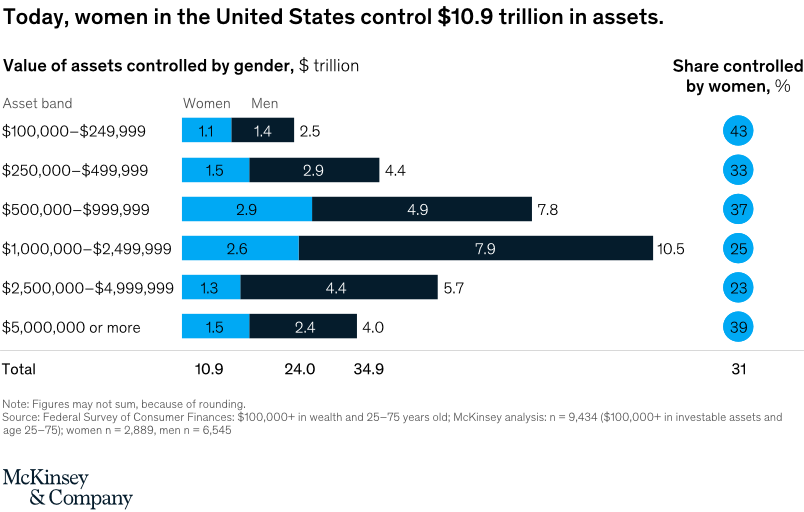
Over the next 20 years, an estimated $80 trillion will change hands as older generations pass on their wealth. As a significant portion of this wealth transfer benefits Gen Z and millennial women and positions them as key financial decision-makers, banks and financial institutions should be ready with a plan to speak to and cultivate this newly wealthy audience.
The Implications for Banks
This monumental shift, often referred to as the “Great Wealth Transfer,” signifies a crucial opportunity for banks to rethink their strategies. According to a Capgemini survey, only 9% of financial services executives are targeting Gen Z customers. Ignoring this demographic could result in missed opportunities and a failure to capture a loyal customer base.
What Can Banks Do to Better Serve This Demographic?
The Power of Influence(rs)
The good news for banks is that young women are already interested in financial news. A growing number of them are following influencers and online communities focused on financial topics. Platforms like Instagram and TikTok are rife with financial advice tailored to their needs — but just because it’s there and popular doesn’t make it good advice. Banks have a built-in credibility that they can and should leverage on these platforms to engage with young women and build trust through authentic, relatable content. The key to connecting with that audience is to not use the same approach that they’ve been using in the past — it has to feel appropriate for the channel first. Anything that comes across too stiff or formal will feel inauthentic and unrelatable, so banks will need to get comfortable with a new approach to content if they want to connect.
An Adjustment in Offered Services
One of the biggest frustrations for Gen Z and millennial women is the lack of tailored financial services. Many banks offer generalized services that don’t address their specific needs, such as managing student debt, financial planning for singles, investing sustainably, or planning for future family life. By offering customized solutions in formats that resonate, banks have the opportunity to foster long-term loyalty with a base that is historically loyal to organizations that they feel a connection with.
Understand Their Needs
Young women often feel misunderstood or unseen by traditional financial institutions. They seek banks that can empathize with their struggles and offer solutions that level the playing field. By conducting user research into their needs, wants, and preferences and by leveraging transaction data, banks can gain deeper insights into the financial behaviors and preferences of young women and can better tailor their products, services, and resources.
Avoid Patronizing at All Costs
Historically, women have felt sidelined and patronized by the financial services industry. For decades, men have been the primary targets of the thinking, messaging, and advertising for most financial institutions and organizations. But with the coming feminization of wealth, it’s time for banks to rethink that approach. How can they do that effectively? By providing non-patronizing, accessible financial planning tools that empower young women to make informed decisions. This means educational resources, user-friendly digital interfaces, and personalized advice that respects their intelligence and ambition as well as their relationship status and how that affects their plans.
A Chance to Build Long-Term Loyalty with a New Base
The economic landscape is evolving, and young women are emerging as powerful financial players. For banks, this presents both a challenge and an opportunity. By understanding the unique needs of Gen Z and millennial women and offering tailored services, banks can not only capture this valuable market but also build lasting relationships based on trust and mutual growth.
It’s time for banks to recognize the rising economic influence of young women and adapt their strategies accordingly. Those that do will not only thrive in the current financial ecosystem but will also pave the way for a more inclusive and innovative banking future.
____________________________________________________________________________________
Find Your Brand’s Strategy with LevLane Advertising
Not sure where to start with your bank’s marketing strategy? We’re here to help. Shoot us a message, tell your story, and we’ll be in touch.